Skip to content
Dr. Danousch Missaghian — Home

Snoring & sleep apnoea

Snoring and sleep apnoea: find the cause first

Snoring is a sound; obstructive sleep apnoea is a condition, and from the outside they can look the same. The examination shows which level of the airway is narrow, and where it is needed a sleep study shows which of the two you are dealing with.

Snoring or sleep apnoea? They are not the same

Snoring is the sound of soft tissue vibrating in a narrowed airway. It can be loud and still be nothing more than noise. Obstructive sleep apnoea is different: the airway closes repeatedly through the night, breathing pauses, and sleep is broken without you being aware of it.

The two often travel together, and volume does not separate them. Someone who snores quietly can have significant apnoea. Someone who snores loudly may have nothing more than a narrow nose.

Interrupted sleep does not restore you in the same way, and that shows up in the daytime rather than at night. A dry mouth, a morning headache, poor concentration and fighting sleep after lunch are often the first clues. The purpose of the assessment is to know which pattern applies to you rather than assume it.

Snoring comes from one or more of three levels

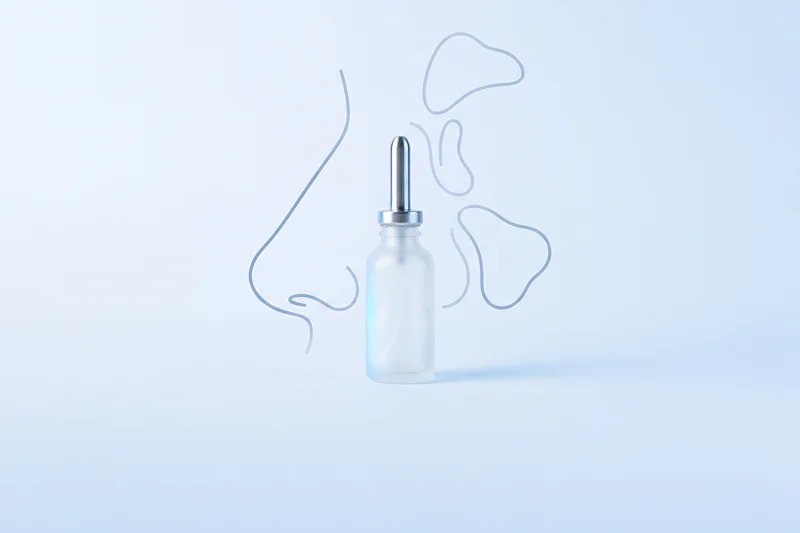
The upper airway can narrow in three broad places, and each behaves differently. At the level of the nose, a bent septum, enlarged turbinates or allergic swelling restrict airflow before it ever reaches the throat. At the level of the palate and tonsils, soft tissue vibrates as air passes it. At the level of the tongue base and throat, the airway loses tone during sleep and falls back.

Many people narrow at more than one level. The pattern is individual, and it shifts with sleeping position, nasal congestion, alcohol, sedating medication and the stage of sleep.

A treatment works best when it targets the level that is actually narrowing. This is why a device, a spray or a procedure can make a real difference for one person and change nothing at all for another.

Why the person next to you notices it first

Sleep apnoea is difficult to observe from the inside. You do not remember the pauses, the gasps or the position changes, because they do not wake you fully. The partner in the room is usually the first person able to describe what is really happening.

Partners are welcome at the consultation, and what they report is genuinely useful clinical information. How loud, how often, whether the sound stops and restarts, and whether it changes when you turn onto your side all help direct the examination.

If you sleep alone, a phone recording of one ordinary night serves a similar purpose. Bring it with you.

Why we measure rather than guess

The market is full of strips, sprays, pillows and mouthguards, and most of them address a single level of the airway. Used without knowing where your own narrowing sits, they become a sequence of experiments rather than a treatment. Some of them do help. Knowing which, before you buy the next one, is the useful part.

An ENT examination establishes the anatomy. A sleep study records what your breathing actually does across a night. The two together replace assumption with information, and the plan follows from there. Understand the cause, then treat the source.

When it is worth seeing a specialist

When it is worth having this looked at

None of these is a diagnosis on its own, and each is a reason to measure rather than guess.

  • Your partner has heard you pause or gasp
  • You wake with a dry mouth or a headache
  • You are still tired after a full night in bed
  • You get up to the bathroom more than once a night
  • You fight sleep in meetings or while driving
  • Your snoring changes when you lie on your back
  • You breathe through your mouth at night, every night

Consultation

How the examination works

  1. 1

    Talking through the night

    We start with how you sleep, how you wake, and what the person beside you hears. Nasal history, weight changes, alcohol timing, medication and shift patterns all belong in this part of the conversation.

  2. 2

    Looking at the airway

    The nose, palate, tonsils, tongue base and larynx are examined with a thin flexible video-endoscope while you are seated, using a local anaesthetic spray. The images appear on the screen beside you on a KARL STORZ and Otopront system, and each level is assessed in turn while you watch.

  3. 3

    Measuring the night itself

    When the history and the examination point beyond simple snoring, a sleep study is arranged so that breathing, oxygen levels and sleeping position are recorded across a full night. In many cases this can be done at home, in your own bed.

  4. 4

    Matching treatment to the level

    The endoscopic findings, the sleep study and your own priorities are discussed together before anything is decided. The plan follows the level that is narrowing, and a procedure enters the discussion only when it is indicated.

Snoring & sleep apnoea

Treatment options

01

Opening the nose

Nasal obstruction is addressed first, because air has to pass the nose before the rest of the airway can be judged fairly. Depending on the cause this may mean allergy treatment, correction of a deviated septum, or laser-assisted reduction of enlarged turbinates.

02

Laser-assisted palate procedures

When the examination shows that the soft palate is the vibrating level, a laser-assisted procedure to reduce and firm that tissue can be considered. It is offered only where the palate is the relevant level, and we go through what it involves and how recovery usually feels beforehand.

03

Tonsil surgery when indicated

Large tonsils narrow the throat at much the same level as the palate, particularly in children and younger adults. Tonsillectomy or partial tonsillotomy is discussed when tonsil size is a substantial part of the obstruction.

04

CPAP and sleep-medicine referral

Moderate and severe obstructive sleep apnoea is generally managed with positive airway pressure, and the referral is arranged and followed up rather than handed over. Nasal treatment often runs alongside it, since the mask depends on the nose being open.

05

Position, weight and evening habits

Some people narrow only when lying on their back, and positional measures belong in the plan when the sleep study shows that pattern. Weight, alcohol close to bedtime and sedating medication are discussed plainly, because they change the airway whatever else is done.

Common questions

Common questions

The questions patients ask most often before their first appointment.

No. Many people snore without any interruption to their breathing, and the sound alone is not a diagnosis. The difficulty is that loudness does not separate simple snoring from apnoea, which is why the airway is examined and, where the pattern calls for it, the night is measured.

Consultation

Book a consultation

Snoring is a sound; obstructive sleep apnoea is a condition, and from the outside they can look the same. The examination shows which level of the airway is narrow, and where it is needed a sleep study shows which of the two you are dealing with.

Quttainah Specialized Hospital · Al Wasl Road, Umm Suqeim 3, Dubai